
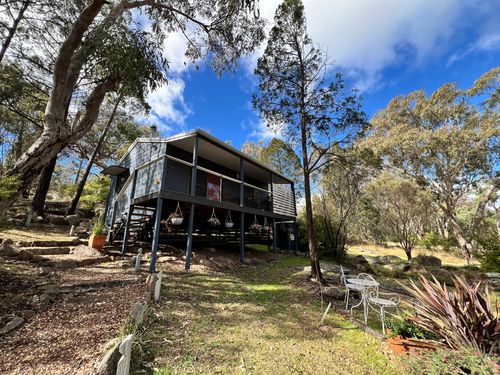
31 The Rocks is a resort of five self-contained villas that has recently adopted the Tourism Emissions Reduction Program.
Located in the tranquil outskirts of Stanthorpe, Queensland, 31 the Rocks is a collection of five self-contained villas that have epitomised eco-friendly hospitality for 16 years. With a recent change in ownership in February 2024, the business embraced a new direction focused on robust sustainability practices through the integration of the Tourism Emissions Reduction (TER) Program.
The previous sustainability efforts of 31 the Rocks were modest, and primarily aimed at reducing landfill waste. The new owner, upon acquiring the property, recognised a need for a more structured approach to track and enhance the villa’s carbon footprint and sustainability initiatives. This shift was partly inspired by their participation in QTIC’s Sustainability training program, which highlighted the importance of each business playing a role in environmental preservation.
Adopting the TER Program proved to be a strategic move. The platform’s user-friendly, step-by-step approach allowed the owner to navigate through the initial stages quickly, completing stages 1 to 4 in just about three hours.
” The intuitive platform transformed what I expected to be a complex process into a straightforward one, enabling us to implement significant sustainability measures effectively,”
Nicci Goulter, the owner remarked.
These new strategies focused on reducing emissions through several key actions such as minimising waste, optimising supply chains, and considering renewable energy options. The process not only structured the business’s approach to emissions reduction but also provided tools to promote their commitment, enhancing guest interactions and social media engagement.
Looking forward, 31 the Rocks plans to continue utilising the TER Program platform to refine its strategies and draw insights from a community of like-minded businesses. “The TER Program isn’t just a tool; it’s a comprehensive support system that guides informed and impactful decision-making,” the owner explained, recommending other businesses to take the leap into sustainability.
The owner envisions a future where sustainability standards are integrated into accommodation ratings, driving the industry to align with evolving guest expectations. Through the TER Program, 31 the Rocks is not only adapting its business practices but also influencing the broader hospitality sector towards a more sustainable future.